How to Season a Brass Tawa: First-Use Guide + 7 Care Rules
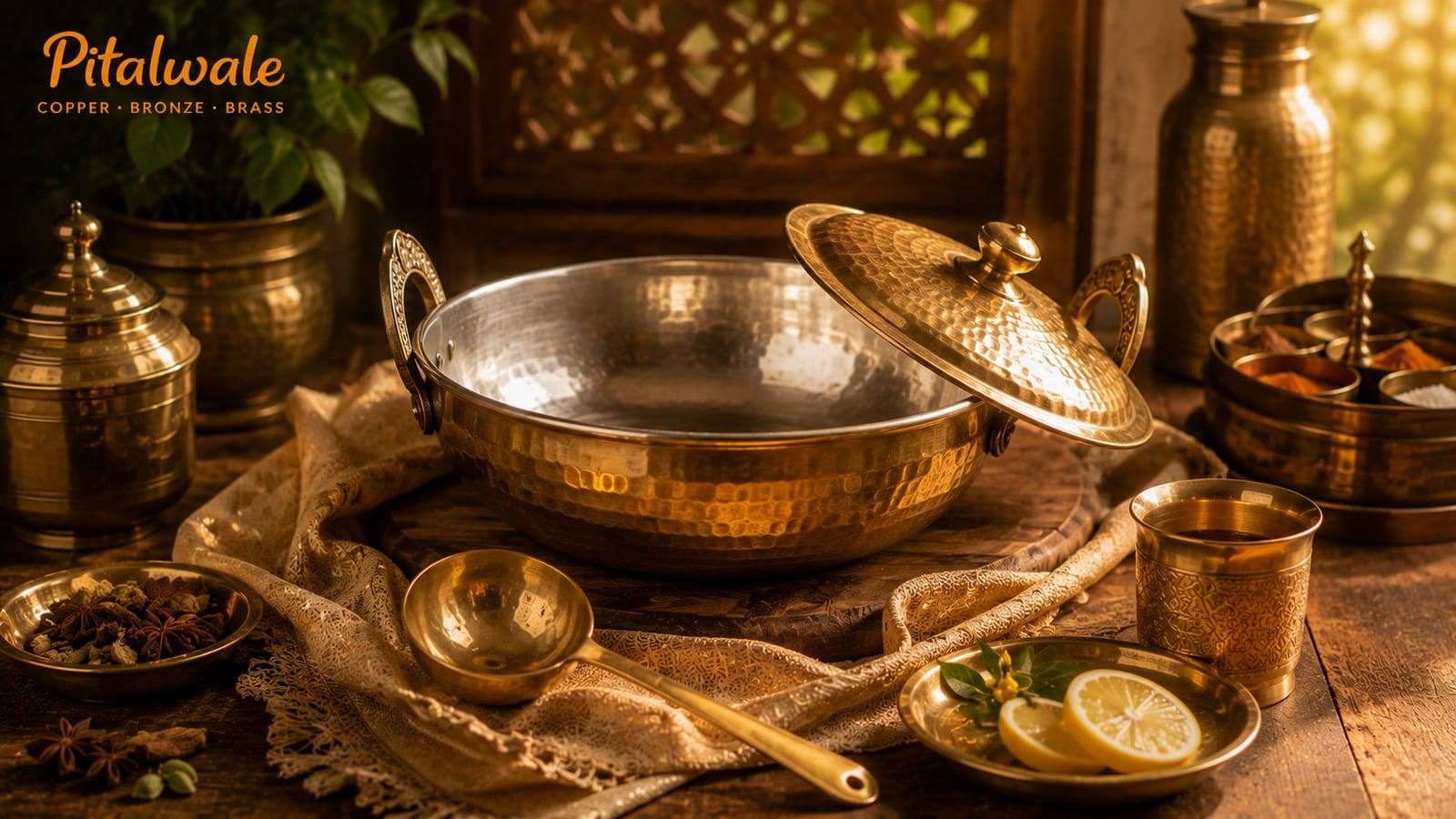
A heavy-gauge brass tawa is the opposite of disposable cookware: season it once, treat it right, and it will brown phulkas evenly for decades. But that first seasoning — the step most people skip — is what separates a tawa that rotis glide off from one they stick to. Here's the complete first-use ritual and the care habits that follow.
Why season a brass tawa at all?
Seasoning fills the metal's microscopic pores with polymerised oil, creating a natural non-stick layer — the original non-stick, centuries before coatings existed. It also acts as a barrier between the metal and your food, so every roti tastes clean.
First-use seasoning, step by step
- Step 1: Wash the new tawa with warm water and mild soap; dry it completely.
- Step 2: Rub a thin, even film of cooking oil (ghee works beautifully) over the cooking surface.
- Step 3: Heat on a low flame for 4–5 minutes — the oil will shimmer and darken slightly.
- Step 4: Switch off, let it cool fully, wipe away the excess with a cloth.
- Step 5: Repeat once more if you want a stronger base. Done — the tawa is ready for its first roti.
The 7 care rules for a lifetime tawa
- 1. Always pre-heat on medium — a properly heated brass surface cooks evenly and releases cleanly. Brass conducts heat superbly; it never needs a high flame.
- 2. Wipe while warm — a warm cloth wipe after use is 90% of tawa care.
- 3. Never soak overnight — standing water is the enemy of the seasoning and the shine.
- 4. No steel scrubbers — a soft sponge preserves the seasoned surface.
- 5. Re-oil lightly after washing — a few drops, spread thin, before storing.
- 6. Store bone-dry — moisture means water spots and tarnish.
- 7. Clean the outside only with acid — lemon-salt or tamarind on the outer surface; keep acids off the seasoned cooking face.
When the shine fades
The outer surface will darken with flame contact — that's honest wear, and a two-minute tamarind rub restores the gold whenever you want it (full methods in our brass cleaning guide). The cooking surface, though, should stay seasoned and slightly matte. Dark and smooth on top, golden below: that's a tawa living its best life.
Frequently Asked Questions
Do rotis really taste different on brass? Heavy brass holds and spreads heat more evenly than thin aluminium, so rotis cook through without scorching — softer centres, even browning. That's the difference you taste.
How often should I re-season? Only when food starts catching — typically once every few months with regular use. The light re-oil after each wash maintains the layer in between.
Where can I get a genuine heavy-gauge tawa? Our kitchen & dining collection includes hand-finished heavy-gauge brass tawas made in Pital Nagri — the kind that gets passed down, not replaced.
Bring home a piece worth keeping
Explore our handcrafted brass, copper and bronze collection — free shipping over ₹999.
Shop now