How to Clean Brass Utensils at Home: 5 Desi Methods That Work
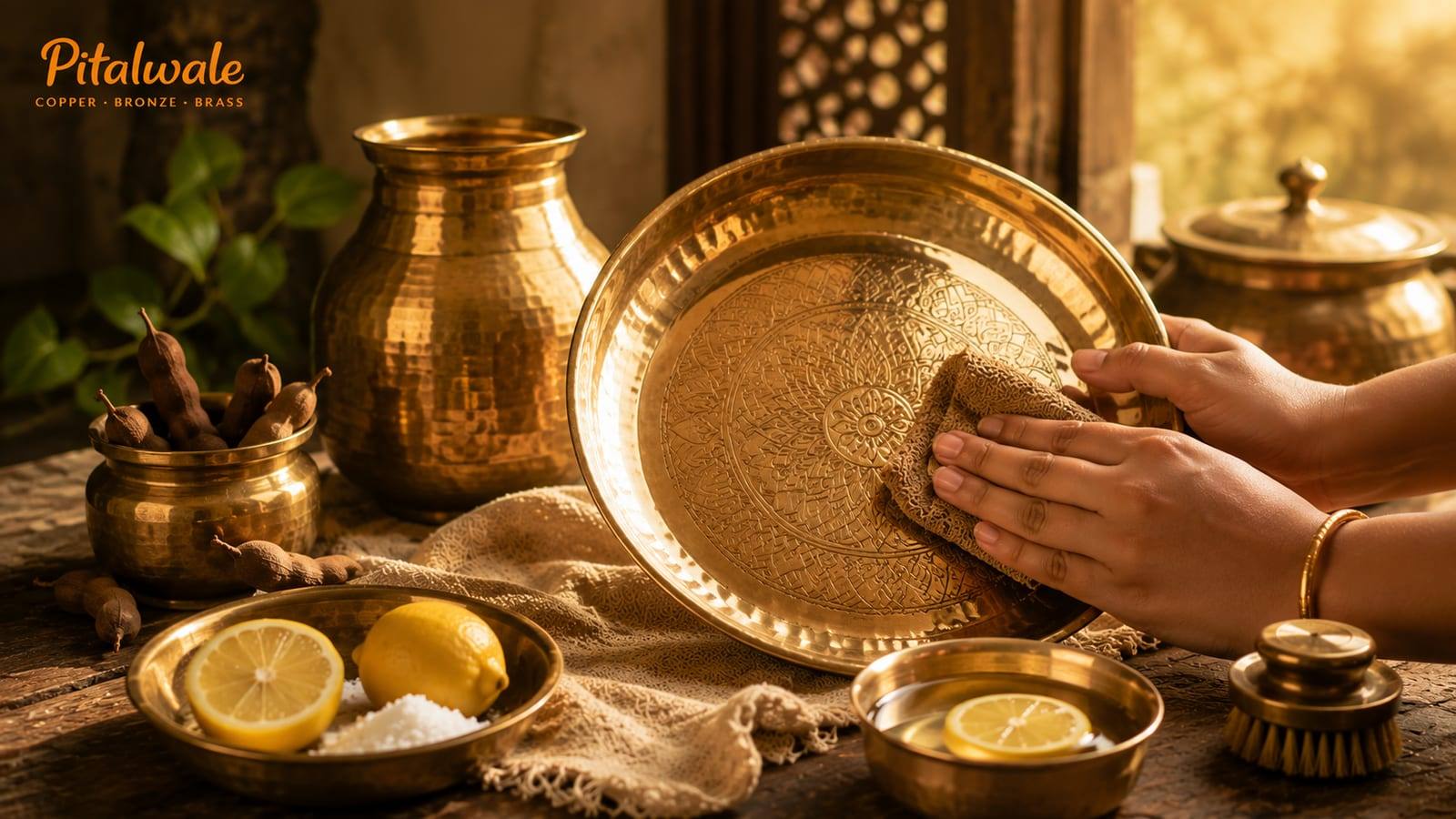
Every brass utensil in your kitchen is quietly reacting with air. That dull brown film is just oxidation — and for generations, Indian households have removed it with things already sitting in the masala dabba. No chemicals, no branded polish. Here are the five methods the artisans of Pital Nagri themselves swear by, and the science of why each one works.
Why does brass turn dull in the first place?
Brass is an alloy of copper and zinc. The copper reacts with oxygen and moisture to form copper oxide — tarnish. Mild, food-safe acids dissolve that oxide layer and reveal the golden metal underneath. That's the entire trick behind every method below.
Method 1: Tamarind (the artisan's favourite)
Soak a lemon-sized ball of imli in warm water for 10 minutes, then rub the softened pulp over the brass. Tamarind's tartaric acid dissolves tarnish gently without scratching — which is why it's the method of choice for engraved and etched pieces. Rinse warm, buff dry.
Method 2: Lemon + salt (2-minute shine)
Cut a lemon in half, dip the cut face in salt, and scrub in small circles. The citric acid dissolves the oxide while salt works as a mild abrasive. Perfect for quick touch-ups before guests arrive. Rinse thoroughly — acid left sitting on brass will stain it.
Methods 3, 4 and 5
- Vinegar–flour–salt paste — mix to a spreadable paste, apply, rest 10 minutes, rinse and buff. Best for heavy, even tarnish on large thalis and urlis.
- Curd or buttermilk — the traditional village method. Lactic acid works slowly and very gently; ideal for delicate heirloom pieces.
- Warm soapy water — for lacquered or daily-use brass, mild soap is all you need. Anything stronger strips the lacquer.
The 4 mistakes that ruin brass
- Steel wool or harsh scouring pads — they leave permanent scratches.
- Leaving acid on too long — rinse within a couple of minutes, always.
- Air-drying — water spots become tomorrow's tarnish. Buff dry with a soft cotton cloth.
- Dishwashers — never. Detergent + heat pits and discolours brass permanently.
Or simply let it age
Here's the secret collectors know: patina is not dirt. A gently darkened brass piece has character that polish can't buy. Clean when you want the glow, let it deepen when you want the soul. Either way, a handcrafted brass piece only gets more beautiful with years.
Frequently Asked Questions
How often should I polish brass utensils? Daily-use pieces: a quick wipe after washing, deep clean once a month. Décor pieces: two or three times a year is plenty.
Can I use toothpaste to clean brass? It works in a pinch — mild abrasive plus surfactants — but tamarind or lemon-salt is cheaper, faster and safer on engraving.
Why does my brass smell metallic after cleaning? Freshly exposed metal briefly smells that way; a final wash with mild soap and a thorough dry removes it. For cooking brass, see our brass tawa seasoning guide.
Bring home a piece worth keeping
Explore our handcrafted brass, copper and bronze collection — free shipping over ₹999.
Shop now