Copper vs Brass Utensils: Which Is Better? 7 Real Differences
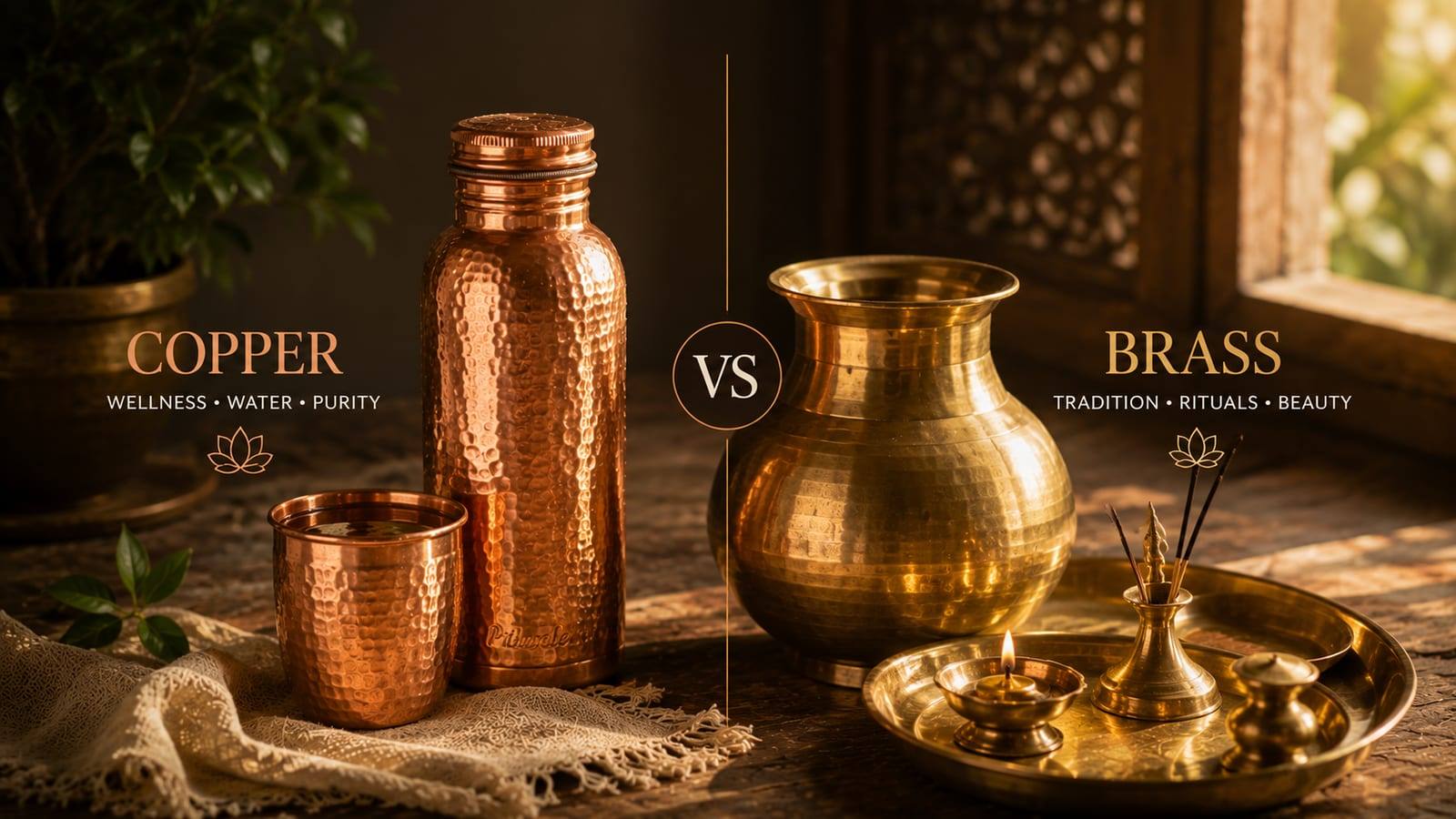
Walk into any Pital Nagri workshop and you'll see both metals glowing side by side — reddish copper, golden brass. They're often confused, frequently mislabelled online, and priced very differently. Here's the honest, artisan's-eye comparison, so you buy the right metal for the right job.
First, what are they actually made of?
Copper is a pure element — nothing added, reddish-pink, soft enough to hammer by hand. Brass is an alloy of copper and zinc (typically around 70:30), which makes it harder, more golden, and able to hold crisp engraving. That one difference in composition drives every practical difference below.
The 7 differences that matter
- 1. Colour — copper glows reddish-gold; brass shines yellow-gold. Side by side, you'll never confuse them again.
- 2. Purpose in Ayurveda — the classical kitchen triad: copper for storing water, brass for cooking, kansa for eating. Each metal has its seat.
- 3. Health use — only pure copper gives you Tamra Jal and the oligodynamic effect. Brass water bottles are not a substitute.
- 4. Durability — brass is harder and more dent-resistant; copper is softer and shows life sooner (some of us call that character).
- 5. Detail work — brass holds fine engraving, which is why pooja thalis, diyas and idols are almost always brass.
- 6. Care — both clean with lemon-salt or tamarind, but copper tarnishes faster and rewards more frequent quick wipes.
- 7. Price — pure copper usually costs more per piece than brass of the same weight, because the metal itself is dearer.
So which should you choose?
Choose copper if the goal is water — bottles, jugs, glasses and the morning Tamra Jal ritual. Choose brass if the goal is cooking, serving, pooja or décor — kadhais, thalis, diyas, urlis. Most Indian homes eventually settle on the classic pairing: a copper bottle on the bedside table and a brass thali in the mandir.
The counterfeit warning
A magnet is your best friend: neither copper nor brass is magnetic. If a 'copper' bottle grabs a magnet, it's copper-plated steel. Check the weight too — solid metal feels dense and substantial; plated pieces feel suspiciously light. Every PitalWale piece is solid metal, hand-finished, and honestly labelled.
Frequently Asked Questions
Is brass safe for drinking water? It's safe for short-term serving (lotas, glasses at meals), but for overnight storage and health benefits, pure copper is the classical and scientific choice.
Which is easier to maintain? Brass. It tarnishes slower and shrugs off daily handling. Copper asks for a little more love and gives back a little more glow.
Can I cook in copper directly? Traditional copper cookware is lined (kalai/tin) for acidic foods. For everyday Indian cooking, a heavy brass kadhai or tawa is the more practical workhorse.
Bring home a piece worth keeping
Explore our handcrafted brass, copper and bronze collection — free shipping over ₹999.
Shop now